

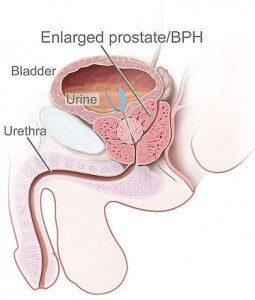
 It is the largest auxiliary gland of the male reproductive system. The secretion of the glands, which constitutes about 20% of the volume of semen, stimulates the movement of sperm in the semen and gives a distinctive odor. The protector has a size and shape as chestnut, surrounds the prostatic urethra fate, displays not the top, base and four faces. The normal weight of the adult male is 20-25 gr and regarding its structure consists of glandular tissue in a proportion of 50-70% and the remaining elements inomyika 30-50%.
Despite the fact that the old classification of prostate lobes is useful in daily practice, the understanding of the anatomy suggested by Mc Neal helps to further deepen the pathology of the organ.
The zones described by Mc Neal are:
It is the largest auxiliary gland of the male reproductive system. The secretion of the glands, which constitutes about 20% of the volume of semen, stimulates the movement of sperm in the semen and gives a distinctive odor. The protector has a size and shape as chestnut, surrounds the prostatic urethra fate, displays not the top, base and four faces. The normal weight of the adult male is 20-25 gr and regarding its structure consists of glandular tissue in a proportion of 50-70% and the remaining elements inomyika 30-50%.
Despite the fact that the old classification of prostate lobes is useful in daily practice, the understanding of the anatomy suggested by Mc Neal helps to further deepen the pathology of the organ.
The zones described by Mc Neal are:
- The transition zone [transition zone (TZ)]: represents 10.5% of the volume of the gland and consists of two lateral lobes. From this zone develops benign prostatic hyperplasia and 20-25% of prostate cancers.
- The central zone [central zone (CZ)]: is 25% of the prostate volume and contains ejaculatory resources. 5-10% of prostate cancers occur in this zone and a large percentage of inflammation.
- The peripheral zone [peripheral zone (PZ)]: is 70% of the volume of the instrument. In this anatomical region displayed the highest rate of prostate cancer (65-70%).
- The anterior zone (anterior zone): consists mostly of inomyika elements and contains no glands.